

In the United States, the phrase “Easter basket” usually means a candy-and-gifts basket for kids, not only a food basket for church blessing or a holiday meal. That matters financially, because the real Easter bill in 2026 is often split into two parts: the basket itself and the food that goes on the table. This year, both are under pressure. Americans are expected to spend a record $24.9 billion on Easter in 2026, with average planned spending of $195.59 per person, according to the National Retail Federation. At the same time, food prices are still running above their pre-inflation baseline, and candy prices remain especially painful. The result is that even families trying to keep Easter simple can feel like the holiday got more expensive without becoming bigger or better.
The financial story is not just that Easter is costly. It is that the entry-level version of Easter is no longer as cheap as people remember. A small basket with a chocolate bunny, a few candies, plastic eggs, and one or two inexpensive extras can still be done on a budget, but the margin for error is much smaller than it used to be. Move even slightly upward into branded chocolate, more decorations, better-quality toys, flowers, or a full Easter meal, and the total rises fast.
What usually goes into an Easter basket in the U.S.
A basic American Easter basket typically includes:
- a basket, bucket, or gift bag
- plastic eggs or an egg-dyeing kit
- one chocolate bunny or chocolate eggs
- marshmallow candy or jelly beans
- a few small toys, stickers, books, or plush items
- sometimes pajamas, spring clothing, or gift cards in higher-end baskets
That list sounds simple, but candy inflation has made the “cheap filler” part of the basket noticeably less cheap. The Bureau of Labor Statistics said the candy and chewing gum index was up 11.6% year over year in February 2026, and in the same February report said the candy-and-chewing-gum index rose 3.7% just from the prior month. In other words, the classic basket category that used to help families build a fun holiday cheaply is now one of the categories adding the most pressure.
What a budget Easter basket costs in 2026
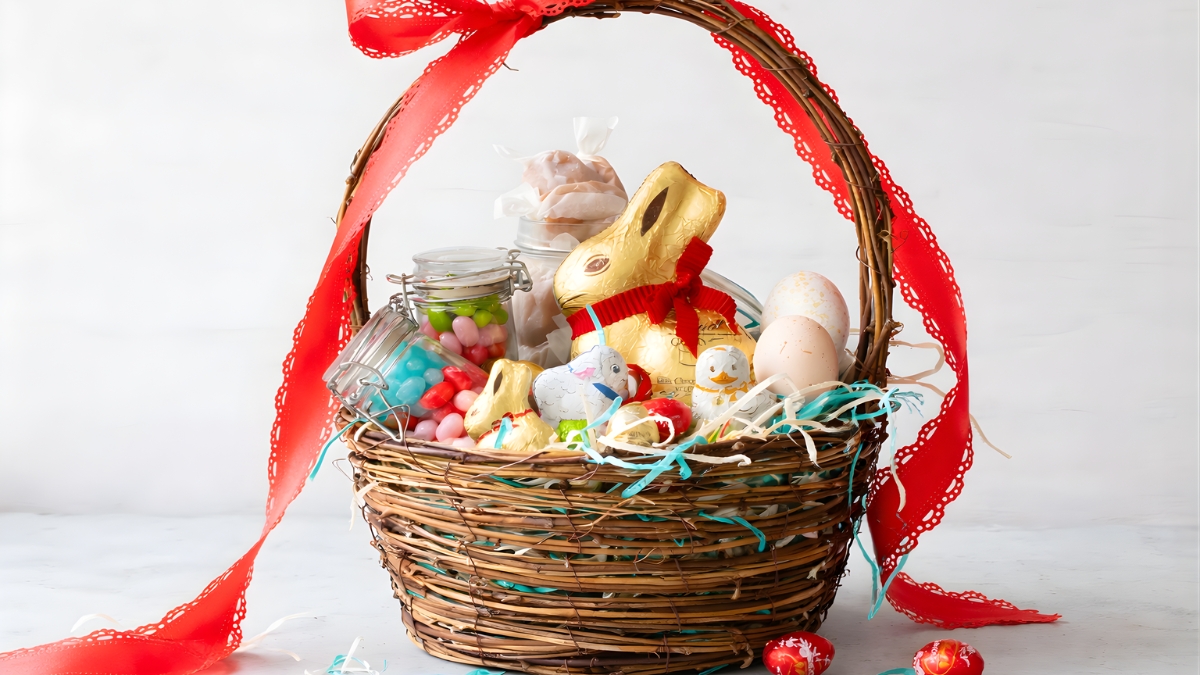
A realistic budget Easter basket in the U.S. right now is roughly $20 to $40 per child, depending on where a family shops and how strictly it avoids branded add-ons.
That kind of basket usually looks like this:
- low-cost basket, tote, or reusable container
- one modest chocolate item
- one or two lower-cost candy fillers such as jelly beans or marshmallow treats
- plastic eggs or a dye kit
- one small toy, coloring item, or book
Why does even the budget version still land in that range? Because the low-price items are no longer truly low-price. Chocolate costs have been pressured by higher cocoa costs, and candy prices broadly are still elevated. Even if egg prices have cooled from their 2025 spike, other basket fillers have not given consumers much relief. A family building two or three baskets can quickly turn a “small treat” holiday into a $60 to $120 outing before buying any meal food at all.
What an expensive Easter basket costs in 2026
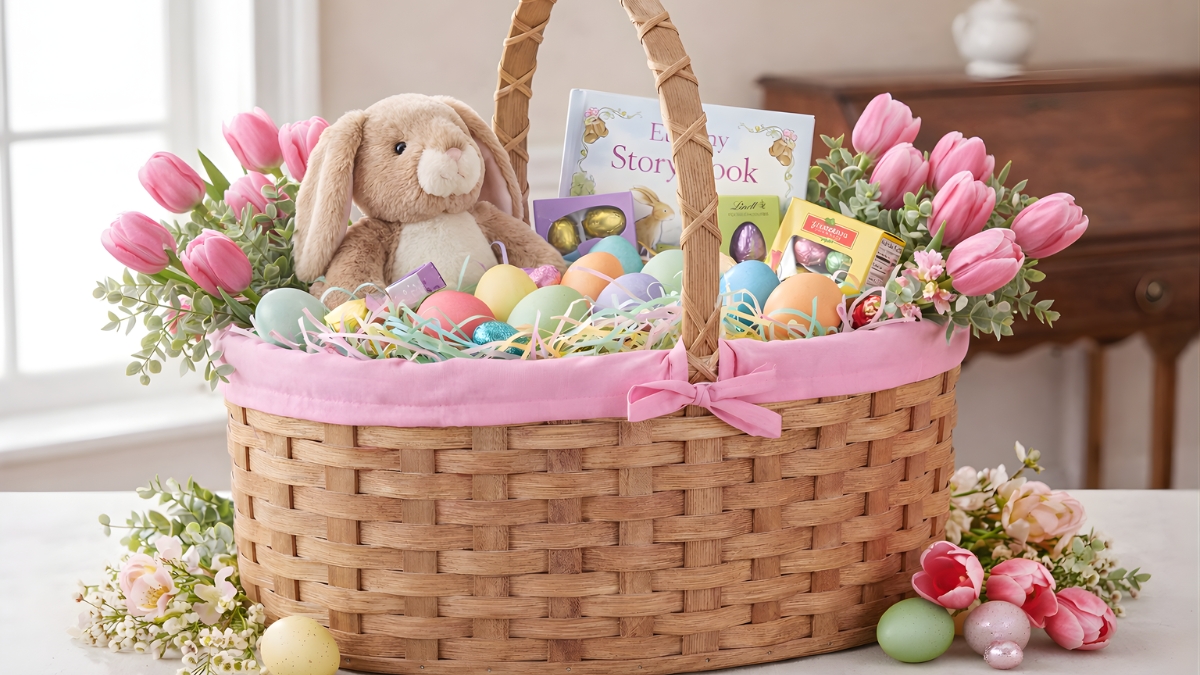
An expensive Easter basket can easily run $75 to $150 or more per child, and in affluent households it can go higher than that.
That version usually includes:
- a decorative basket or personalized container
- premium branded chocolate or multiple chocolate items
- larger plush toys or branded gifts
- books, spring clothing, shoes, or accessories
- beauty items, electronics accessories, or gift cards for older kids and teens
- decorative extras such as ribbon, tissue, flowers, and custom packaging
The reason the premium basket jumps so quickly is not only inflation. It is category stacking. Once a basket stops being mostly candy and becomes part toy bundle, part clothing purchase, and part seasonal gift package, it stops behaving like a holiday treat and starts behaving like a birthday-lite spending event. That is one reason record Easter spending can coexist with so much consumer stress: households are not only buying candy, they are buying across multiple retail categories at once.
The meal matters almost as much as the basket
For many households, the Easter meal is where the financial pressure really becomes visible. The basket may be what children notice first, but the grocery bill is often what adults feel most.
The latest BLS average-price data show that in February 2026:
- eggs averaged $2.50 per dozen in U.S. cities
- white bread averaged $1.85 per pound
- whole milk averaged $4.03 per gallon
- all ham averaged about $4.56 per pound in U.S. city average data
Those numbers help explain why a “simple Easter table” still adds up quickly. A modest ham meal for a family can easily move into the $35 to $60 range once meat, bread or rolls, potatoes or sides, dessert ingredients, and drinks are included. A more generous Easter meal with better ham, bakery items, extra desserts, flowers, and hosting extras can move into the $75 to $150+ range without much difficulty.
So when Americans say Easter feels expensive, they often are not talking only about one basket. They are talking about the combined cost of baskets + candy + groceries + decorations + hosting.
Why the financial angle matters in 2026
The bigger money story is that Easter is landing in a consumer environment where households are still highly cost-sensitive. The National Retail Federation says consumers are preparing for record Easter spending, but record spending does not automatically mean people feel financially comfortable. In many cases it means families are still willing to protect meaningful traditions, even when those traditions take a bigger bite out of the monthly budget.
That is the key distinction. Consumers are not necessarily spending more because Easter became more luxurious. Many are spending more because the baseline cost of participating has risen. A budget basket is still possible, but it now requires more trade-offs: off-brand candy instead of branded chocolate, fewer toys, fewer baskets, more shared candy, or a simpler meal.
The real difference between a budget and expensive Easter basket
The gap between a budget and expensive Easter basket in 2026 is no longer just a matter of taste. It is a matter of how many categories a household allows into the holiday.
A budget basket stays narrow. It says: one container, a few sweets, one fun extra, done.
An expensive basket becomes a curated seasonal package. It absorbs chocolate inflation, gift inflation, décor spending, and often a piece of spring shopping too. That is why the gap can be dramatic. One household may spend $25 on a basket and feel disciplined. Another may spend $125 and feel like it bought only a “nice” version of the same thing.
Bottom line
In the U.S. right now, a budget Easter basket usually means about $20 to $40 per child, while an expensive Easter basket can easily mean $75 to $150+ per child. Add an Easter meal, and the total household bill rises much faster than many people expect.
The financial takeaway is simple: Easter in 2026 is not necessarily unaffordable, but it is far less forgiving than it used to be. The holiday still looks cheerful on the surface. Underneath, it is another example of how Americans are managing traditions in an economy where even the “small stuff” no longer feels small.
SOURCES
- National Retail Federation – “Easter Spending Expected to Reach a Record $24.9 Billion”
- National Retail Federation – “Easter”
- U.S. Bureau of Labor Statistics – “Average price data (in U.S. dollars), selected items”
- U.S. Bureau of Labor Statistics – “Consumer Price Index Summary – 2026 M02 Results”
- Federal Reserve Bank of St. Louis / U.S. Bureau of Labor Statistics – “Average Price: All Ham (Excluding Canned Ham and Luncheon Slices) in U.S. City Average”