
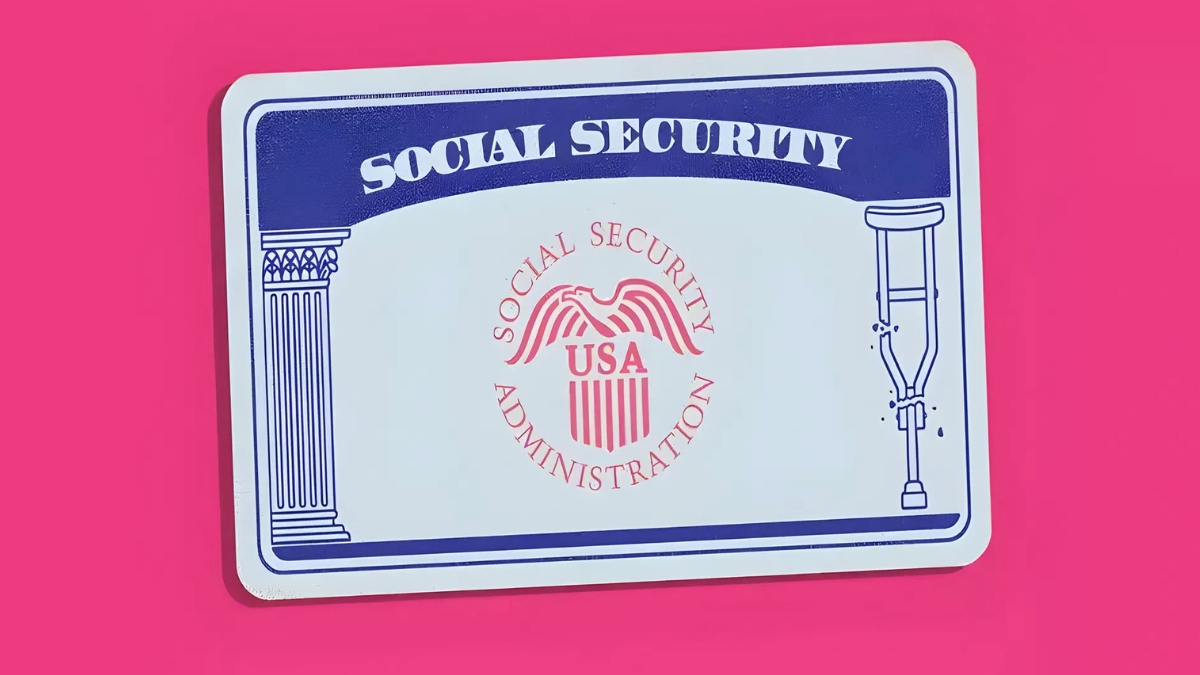
According to a recent Yahoo Finance report, the news around future Social Security benefit cuts has become more alarming in 2026 because newer budget projections now point to a faster squeeze on the retirement program than many retirees expected. The official 2025 Trustees Report still says the Old-Age and Survivors Insurance trust fund can pay full scheduled benefits until 2033, but newer Congressional Budget Office projections cited by analysts point to exhaustion in 2032 for the retirement trust fund. That may sound like a small calendar change, yet for current retirees, near-retirees, and workers planning the next decade of their finances, one lost year matters. It means the pressure on Congress is rising, the margin for delay is shrinking, and the risk of across-the-board benefit reductions is becoming harder to dismiss as a distant problem.
Quick takeaways
- The bad news in 2026 is not that Social Security is suddenly disappearing, but that some newer projections now show the retirement trust fund running dry sooner than many people thought.
- The 2025 Trustees Report says the retirement trust fund can pay full scheduled benefits until 2033, while CBO’s February 2026 baseline projects exhaustion in 2032.
- Once reserves are depleted, benefits would not go to zero, but full scheduled checks could not be paid under current financing.
- For retirees, this is mainly a warning about political delay, not proof that 2026 benefits are about to be cut.
- The biggest practical risk is that Washington waits too long, forcing larger and more abrupt fixes later.
Why this counts as “worse news”
Many Americans have heard for years that Social Security has a long-term funding problem. What changed is the timing and tone.
For a while, the most commonly cited deadline for the retirement side of Social Security was 2033. That remains the official estimate in the 2025 Trustees Report for the Old-Age and Survivors Insurance fund, the part that finances retirement and survivor benefits. But more recent 2026 analysis from the Congressional Budget Office points to 2032 instead.
That shift matters because it shortens the policy runway. Social Security reform is already politically difficult because nearly every serious fix involves tradeoffs: higher taxes, slower benefit growth, a later retirement age, or some combination of all three. If the deadline moves closer, lawmakers have less room to spread changes gradually.
In plain English, retirees just got worse news because the system’s financing problem looks more immediate, not less.
What would actually happen if the trust fund runs out
This is where a lot of coverage becomes confusing. “Trust fund exhaustion” does not mean Social Security stops sending checks entirely. Payroll taxes would still be coming in. But under current law, the program could only pay benefits up to the amount supported by incoming revenue.
The 2025 Trustees Report says that if the retirement trust fund is depleted in 2033, continuing income would be enough to pay about 77 percent of scheduled benefits at that time. On a combined trust-fund basis, the report says 81 percent of scheduled benefits would be payable in 2034 if the two funds were hypothetically considered together. CBO and outside analysts have discussed somewhat different payment rates depending on assumptions and legal mechanics, but the broad message is the same: this is not a cliff to zero, but it is still a meaningful haircut.
That distinction is important because some headlines can sound more dramatic than the likely mechanics. The real danger is not total collapse. The real danger is an automatic reduction from promised benefits to payable benefits if lawmakers fail to act.
Why current retirees should care even if cuts are not happening today
A lot of current retirees may look at this story and think: that sounds bad, but 2032 or 2033 is still years away. That reaction is understandable. Yet there are at least three reasons this matters right now.
First, Social Security is not a side-income program for many older Americans. It is a foundation. SSA data show that nearly nine out of ten people age 65 and older receive Social Security benefits, and for a large share of older beneficiaries the program provides at least half of their income. That means even a partial cut would not be a minor adjustment for many households. It would hit rent, groceries, utilities, insurance premiums, and prescription budgets.
Second, waiting makes reform harder. If Congress acts early, it can phase in changes slowly, protect older retirees more explicitly, and spread the burden over more workers and years. If it waits until the last minute, the menu gets uglier. Policymakers end up choosing between sharper tax increases, more noticeable benefit trims, or heavier borrowing pressure.
Third, markets and households both react to policy uncertainty. Even if no cut is imminent in 2026, repeated warnings about insolvency can change claiming behavior, savings decisions, and retirement timing. That uncertainty itself becomes a financial burden.
Why the outlook worsened
The official Trustees summary says the combined Social Security outlook worsened in 2025 for several reasons. One was the Social Security Fairness Act, which increased projected benefits for some workers by repealing the Windfall Elimination Provision and Government Pension Offset. The Trustees also cited demographic and economic assumption changes, including slower improvement in fertility assumptions and a lower long-run share of GDP flowing to labor compensation.
Outside analysts in 2026 have added another concern: weaker revenue growth can arrive from a softer labor market, lower immigration, or tax-policy changes that reduce the flow of money supporting the system. In other words, the problem is not being driven by one dramatic event. It is the result of multiple pressures working in the same direction.
That is why the story feels more serious in 2026. The debate is moving from abstract concern toward narrowing timelines.
The political problem behind the math
Social Security’s financing gap is not new. What is new is how little political slack remains.
No major party wants to campaign on cutting Social Security. Few elected officials want to champion tax increases either. Raising the full retirement age is politically explosive. Means-testing benefits sounds simple until voters realize it can affect middle- and upper-middle-income retirees who paid into the system for decades. Lifting or removing the payroll tax cap raises revenue, but it is still a tax increase.
So Washington keeps drifting.
That drift is precisely why “worse news” matters more than the precise year itself. A one-year shift in projections is not catastrophic on its own. The problem is that every year of delay makes any eventual package more abrupt. The likely result is not one clean reform, but a rushed fight over who absorbs the pain.
What retirees should and should not do with this information
Retirees should take this story seriously, but they should not read it as a sign that monthly checks are about to suddenly vanish in 2026.
What they should do is update their retirement assumptions. A household that treats Social Security as untouchable and perfectly predictable is taking more policy risk than it may realize. That does not mean assuming the worst-case outcome. It means recognizing that future COLA growth, claiming choices, taxes on benefits, Medicare premiums, and long-term solvency politics all interact.
For people already retired, the practical lesson is to understand how exposed the monthly budget is to a smaller-than-expected benefit stream several years from now. For people nearing retirement, it is worth stress-testing plans against somewhat lower benefits rather than assuming every promised dollar will arrive unchanged forever.
That is not panic planning. It is realism.
What to watch next
The next major marker is the next round of official trust-fund and budget projections. If future estimates continue pulling the exhaustion date forward, the political temperature around reform will rise quickly.
Readers should also watch for how policymakers frame the solution. Some proposals would protect lower-income retirees more aggressively and trim high-end benefits. Others would rely more on tax increases. Others would phase in retirement-age changes for younger workers. The eventual shape of reform matters as much as the fact of reform.
One more thing is worth watching: whether lawmakers continue treating scheduled benefits as if they are guaranteed in baseline budget math even when payable benefits may be lower after trust-fund depletion. Analysts have warned that this can make the federal budget picture look cleaner than reality.
What this means in the United States
For U.S. households, the headline takeaway is simple: the story around Social Security cuts got worse in 2026 because the timeline looks tighter and the room for easy delay looks smaller.
That does not mean retirees should expect immediate cuts this year. It does mean the old habit of treating Social Security’s funding problem as someone else’s problem for some later Congress is becoming less credible. The program is still central to retirement security in America, and that is exactly why the worsening outlook matters. When the financial backbone of tens of millions of households starts losing cushion, even one year on the calendar can feel like a big deal.
SOURCES
- Yahoo Finance — “Retirees on Social Security Just Got Worse News on Benefit Cuts”
- Social Security Administration — “Trustees Report Summary”
- Congressional Budget Office — “Social Security Trust Funds Baseline—02-2026”
- Urban Institute — “Social Security Is Running Out of Money—And Congress Might Count It as Savings”
- Social Security Administration — “Fact Sheet”
DISCLAIMER
General information only; not financial advice.