

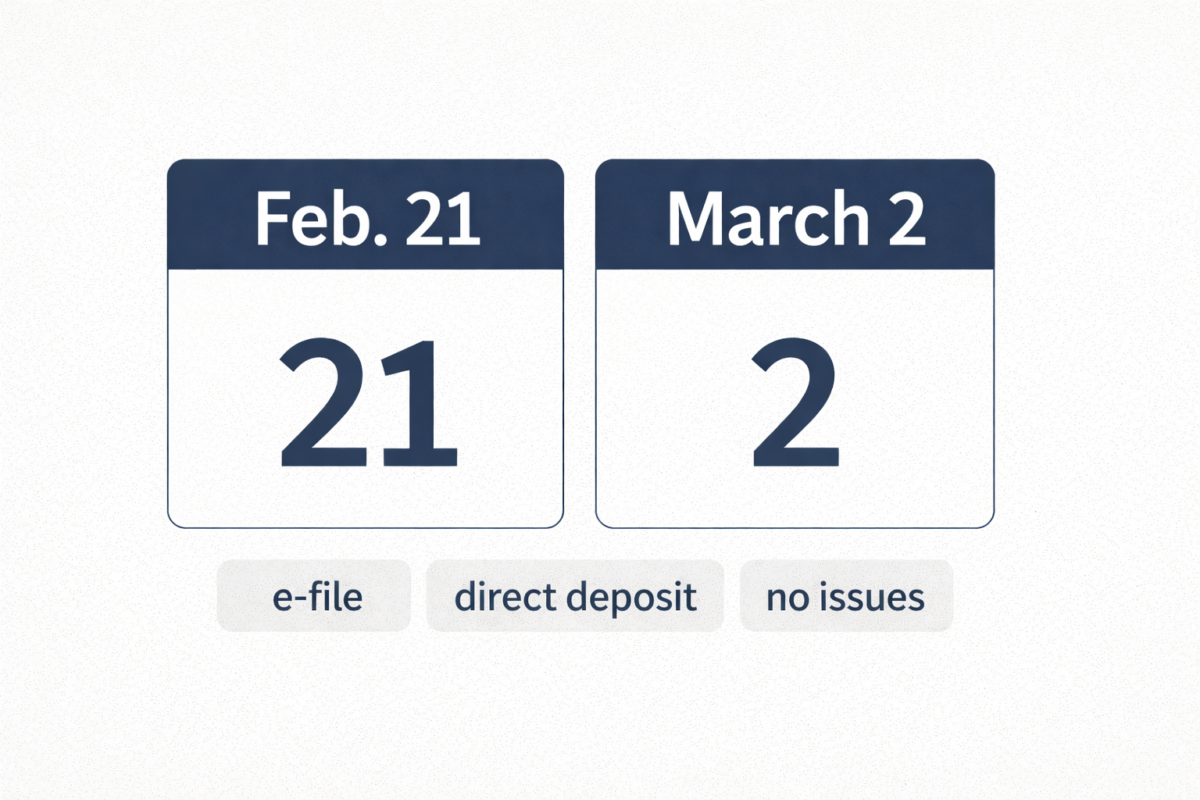
According to the IRS, most early filers who claimed the Earned Income Tax Credit or the Additional Child Tax Credit can expect their refunds by Monday, March 2, 2026, if they filed online, chose direct deposit, and had no issues on the return. That date matters because many households are now watching bank accounts after the PATH Act hold kept those refunds from moving in mid-February. The same IRS guidance says Where’s My Refund should show projected deposit dates for most early EITC and ACTC filers by Feb. 21, 2026, but some deposits can still land later because banks and debit card providers work on their own processing schedule.
Why March 2 became the key date
For many taxpayers, March 2 is not a random estimate.
The IRS said refunds tied to the Earned Income Tax Credit and the Additional Child Tax Credit are expected to reach bank accounts or debit cards by March 2, 2026, for early filers who used direct deposit and cleared basic review. That made the date the clearest public marker in a tax season where many households depend on a refund to cover rent, debt, groceries, or overdue bills.
There is also a second date that matters. The IRS said most early filers in this group should have seen a projected deposit date in the Where’s My Refund tool by Feb. 21, 2026. If that update appeared, March 2 became the next checkpoint.
Why these refunds move later than other refunds
The delay is tied to federal law, not to one specific tax preparer or bank.
The IRS says it cannot issue EITC or ACTC refunds before mid-February. That hold applies to the full refund, not just the portion linked to the credit. The agency uses that extra time to screen for mistakes, verify income and withholding, and reduce fraud tied to refundable credits.
That is why many early filers can see other refunds moving first while their own status stays quiet. The return may already be in the system, but the refund cannot be released on the usual early schedule.
At a glance
- March 2, 2026 is the IRS target date for most early EITC and ACTC refunds if the return was e-filed, sent by direct deposit, and had no issues.
- Feb. 21, 2026 was the key Where’s My Refund checkpoint for most early filers in this group.
- The refund hold is required by law and applies to the full refund.
- Some deposits may arrive earlier or later depending on the bank or debit card provider.
- Errors, paper filing, and IRS review can push the money past the early-March window.
Who is most likely to get the refund on time
The cleanest path is narrow.
The IRS says the March 2 timing is meant for taxpayers who filed online, chose direct deposit, and did not trigger a problem on the return. AP also reported that direct deposit usually shortens the timeline, while paper returns, corrections, or amended filings can drag it out.
That means two taxpayers can claim the same credit and still land on different schedules. One clean e-file may move on the early-March track. Another return with a mismatch, missing form, or paper filing can fall outside it.
Why a refund can still be missing after March 2
A missed deposit does not automatically mean the refund was denied.
The IRS says banks and debit card processors may take extra time to make funds available, especially around weekends and holidays. The agency also lists common reasons for delays, including math mistakes, identity checks, amended returns, and claims that need more review.
That is the practical catch with March 2. It is a target date for many early filers, not a blanket promise for every return that includes EITC or ACTC.
What to do next if the money is not there
The first move is to check the status tool, not to file again.
The IRS says Where’s My Refund updates once a day, usually overnight, and the tool is available about 24 hours after e-filing a current-year return. Taxpayers need the exact refund amount, a Social Security number or ITIN, filing status, and the tax year to check the status. Sending a second return can create a duplicate submission and slow the process further.
The next useful cutoff is simple. If the tracker shows that the refund has been sent but the bank balance still has not changed, the bank or card issuer may still be processing the deposit. If the tracker has not moved, the IRS may still be reviewing the return or preparing a notice.
For now, March 2 is the best public timing clue for early PATH Act refunds. After that, the real signal is the status shown in the IRS tracker and any letter the agency sends next.
SOURCES
DISCLAIMER
DISCLAIMER: This article is for informational purposes only and is not financial, investment, tax, or legal advice. Consider your personal circumstances and consult a qualified professional before making financial decisions.