
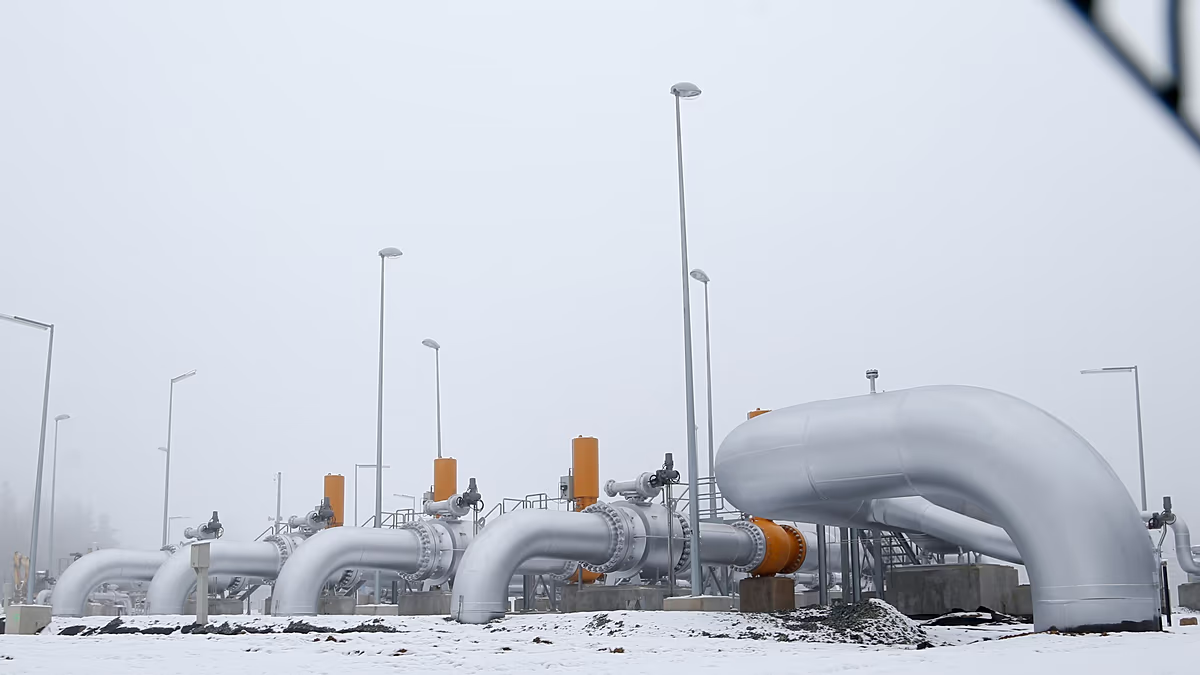
European natural gas prices surged on March 2, 2026, after QatarEnergy said it halted liquefied natural gas production following attacks on its facilities, Euronews reported. Dutch TTF gas was up as much as 45% to around €46 per megawatt-hour, a move that quickly rippled into the U.K. market. The spike adds new uncertainty for Europe’s fuel and power costs just as governments and utilities plan storage refills for next winter.
Why the market moved so fast on March 2
The Middle East sits on key production and shipping lanes for the world’s oil and LNG trade. After U.S. and Israeli strikes on Iran, traders focused on whether the conflict could disrupt flows through the Strait of Hormuz, a narrow route used by tankers and LNG carriers.
European gas prices jumped again when QatarEnergy said it had stopped LNG production. Reuters reported the halt removed a major slice of global supply and followed drone attacks on energy facilities in the region. The Financial Times reported that global gas prices surged by nearly 50% and that Europe’s benchmark rose to roughly €47.80 per megawatt-hour in the session.
What TTF is, and why it matters for bills and inflation
The Dutch TTF benchmark is the main wholesale price reference for gas in much of Europe. A sharp move in TTF can affect:
- wholesale gas purchases by utilities and large industrial users,
- power prices in markets where gas-fired plants often set the marginal price,
- the next round of retail tariff resets in countries with variable or semi-regulated pricing.
Retail impacts usually lag. Many households are on fixed contracts, and some markets smooth changes through regulated tariffs, hedging programs, or government support. Still, a sustained jump in wholesale gas tends to show up later as higher electricity costs, higher heating bills, or both.
Europe’s vulnerability: storage and LNG dependence
Europe entered 2026 more reliant on LNG than before Russia’s 2022 invasion of Ukraine. That shift has improved supply diversity, but it has also made Europe more sensitive to shocks in global shipping and liquefaction.
The European Commission’s gas storage rules were extended and updated through 2027. The key target remains 90% full storage ahead of winter, with a two-month compliance window running from October 1 to December 1 each year. That calendar matters because the summer refill season is when Europe competes hardest with Asia for spot LNG cargoes.
If the Qatar outage lasts, Europe may have to pay up to attract replacement cargoes, especially if shipping risks around Hormuz raise insurance costs or keep vessels waiting. That can lift gas and power prices even in countries that do not buy Qatari LNG directly, because the market price is set at the margin.
Key details
- Dutch TTF gas rose as much as 45% to around €46 per megawatt-hour on March 2, Euronews reported.
- QatarEnergy said it halted LNG production after attacks on its facilities, according to Euronews.
- Reuters reported Qatar’s stoppage removed about one-fifth of global LNG supply and came amid wider regional disruptions.
- The Financial Times reported Europe’s benchmark reached roughly €47.80 per megawatt-hour and that global gas prices were up by nearly 50%.
- The European Commission says the EU’s storage target is 90%, with an October 1–December 1 window to meet it each year.
What to watch next
The most important question is timing: how quickly Qatari output can restart and whether shipping lanes stay open and insured. Even brief interruptions can trigger sharp price moves if traders fear a longer outage.
A second watch point is Europe’s storage math. If inventories finish winter low, the summer refill pull can keep prices elevated even after the immediate shock fades. A mild spring and strong LNG inflows can ease the pressure; another supply hit or a prolonged shipping slowdown can do the opposite.
For readers tracking household costs, the practical marker is whether utilities and regulators begin signaling higher tariff resets for the next billing periods. If wholesale prices settle back quickly, retail effects may be limited. If the shock lingers, the next wave of contract renewals and tariff reviews is where it tends to show up.
SOURCES
- Euronews — “European gas prices jump by as much as 45% as Qatar stops LNG production”
- Reuters — “Qatar LNG, Saudi refinery, Israeli oil, gas fields down due to Mideast strikes”
- Financial Times — “Gas prices soar as Iranian attacks force shutdown of Qatari production”
- AP News — “Oil prices surge as Strait of Hormuz tanker disruptions rattle global supply”
- European Commission — “Gas storage”
DISCLAIMER
This article is for general information only and is not investment, tax, or legal advice. Energy prices can change quickly, and decisions about contracts, heating systems, or investments should be made based on your needs and risk tolerance. Consider consulting a qualified professional for guidance specific to your situation.