
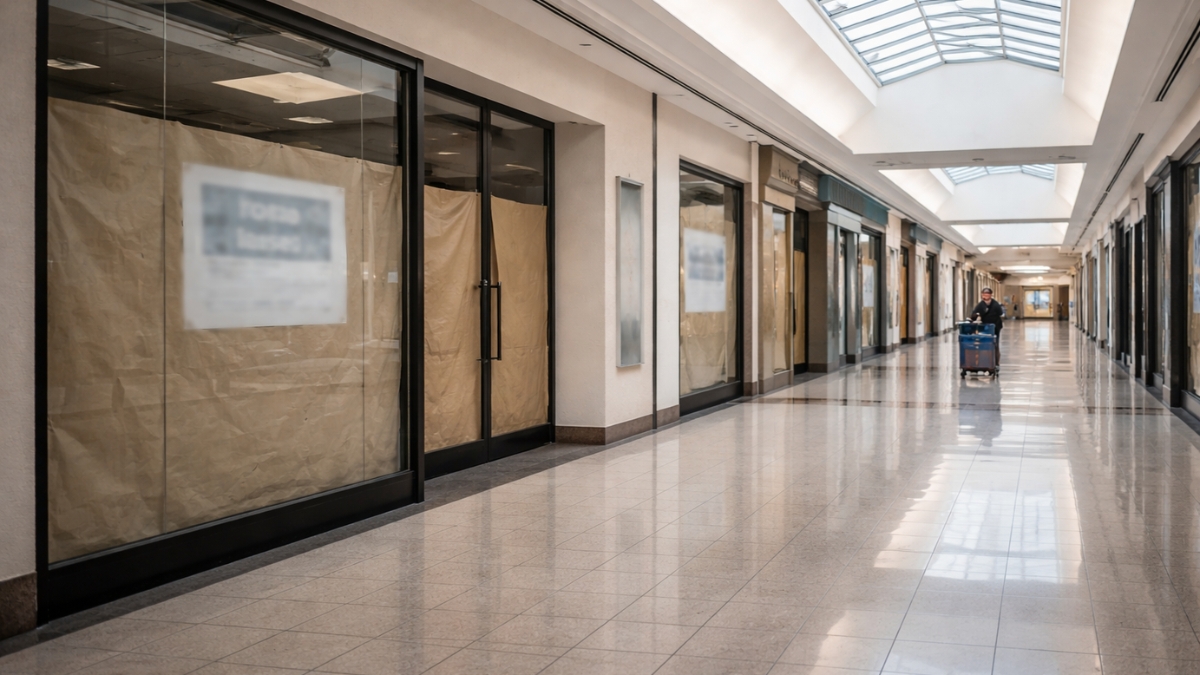
According to G2 Risk Solutions’ January filing data released on Feb. 25, 2026, U.S. commercial bankruptcy filings jumped 49% from a year earlier. The spike is a stress signal for retail because chains run on fixed costs—leases, labor, and inventory financing—and weak quarters can turn into liquidity problems fast. The next question investors and shoppers are asking is the same: which brands are most exposed as 2026 refinancing and margin pressure collide?
The January number that changed the mood
A 49% year-over-year jump sounds like a sudden shock. The underlying story looks more like pressure that finally shows up in filings.
G2 Risk Solutions reported 1,378 commercial bankruptcy filings in January 2026, up 32.3% from December. The firm described the spike as the highest January level for commercial filings since 2018 and framed it as strain “building over time,” not a one-week event. That matters for retail because a lot of chains don’t fail overnight. They bleed through a few quarters, then hit a wall when lenders tighten terms, vendors shorten payment windows, or a refinancing window closes.
Why retail is the obvious stress point
Retail bankruptcies are rarely just “bad sales.” The typical path combines multiple problems:
- Debt that was manageable at low rates becomes harder to carry when interest costs stay high.
- Inventory mistakes force deeper discounts, which can crush gross margin.
- Lease obligations don’t flex down when traffic slows.
- Vendors get cautious when headlines stack up, which can shift terms and reduce product flow.
- Consumers trade down in ways that hit mid-tier brands harder than value players.
This is why the bankruptcy data matters even for shoppers who do not follow markets. A Chapter 11 filing often becomes a store-by-store decision: close weak locations, renegotiate leases, cut overhead, and try to keep the strongest stores alive.
A big-chain example: what “restructuring” looks like in public
High-profile cases tend to show the playbook in real time.
Saks Global’s bankruptcy process has included plans to shutter additional stores and re-focus on more profitable locations, based on court filings and company statements reported by major outlets. It’s the kind of move that turns an industry statistic into local reality: fewer locations, leaner staffing, more online emphasis, and a tighter definition of what the brand actually is.
When multiple large restructurings run at the same time, the ripple effects can hit landlords, mall operators, and suppliers. That is one reason bankruptcy filings are watched as a broader economic indicator, not just a company-by-company story.
“Who could close next?” A safer way to read the signal
Picking “the next bankruptcy” like a bracket is where analysis turns into guessing. A better approach is to build a watchlist based on public stress markers and third-party risk work, then track whether conditions improve or deteriorate.
Key details
- Commercial filings (Jan. 2026): 1,378 total
- Year-over-year change: +49%
- Month-over-month change: +32.3% from December
- Why retail feels it first: fixed costs + financing + inventory risk
- Early warning signs: shrinking liquidity, rising interest burden, heavy discounting
Names that analysts are watching and why it matters
Some risk models try to quantify “how close to the edge” a company is. RapidRatings, which scores corporate financial health, has described a 2026 watchlist of retailers it views as higher risk based on its internal metrics and ratios, citing debt loads, weak cash flow, or business models that have not adapted.
That kind of list should not be read as a prediction that a brand will file. It is better read as a prompt to check the fundamentals: debt maturity schedules, recent cash burn, vendor terms, and whether management has enough room to cut costs without breaking the business.
The bigger takeaway for consumers is practical. If a favorite chain looks stressed, it can change how to shop:
- watch return windows closely
- be careful with big gift-card balances
- confirm warranties and service plans
- expect more promotions as inventory gets moved
What to watch next
The January jump is a headline. The trend is what matters.
Three near-term checkpoints tend to shape the next wave:
- February and March filing data: does January prove to be a one-off spike, or the start of a stronger 2026 pattern?
- Retail earnings and guidance: watch for margin pressure, inventory commentary, and liquidity language.
- Refinancing and vendor behavior: the quiet shifts—tighter credit, shorter vendor terms—often show up before a filing.
Retail is not collapsing across the board. Value and off-price can still gain share when budgets tighten. The warning is narrower: the chains caught in the middle—high fixed costs, heavy debt, and weak pricing power—are the ones that can get forced into drastic decisions quickly.
SOURCES
- CUInsight — “January 2026 Bankruptcy Data Shows Increase in Both Consumer and Commercial Filings Over January 2025”
- Reuters — “Saks Global to close nine more stores amid bankruptcy proceedings”
- MarketWatch — “January Commercial Chapter 11 Filings Increase 76% Over 2025”
- RapidRatings — “Bankruptcy Watch: Retailers Most At Risk After Saks, Francesca’s, Eddie Bauer And FAT Brands”
DISCLAIMER: This article is for informational purposes only and is not financial, investment, tax, or legal advice. Consider your personal circumstances and consult a qualified professional before making financial decisions.